
The information provided by this blog is meant to be informational only. It is not meant to serve as medical advice, treatment, or diagnosis. Please consult with your doctor before adding anything new to your diet or routine.
If you want to improve your well-being but don’t know where to start, you’ve come to the right place. Making small changes in your everyday routine has the ability to improve your health dramatically. Here’s some simple things you can do today that promote wellness but don’t require too much effort:
1. add lemon and salt to your water
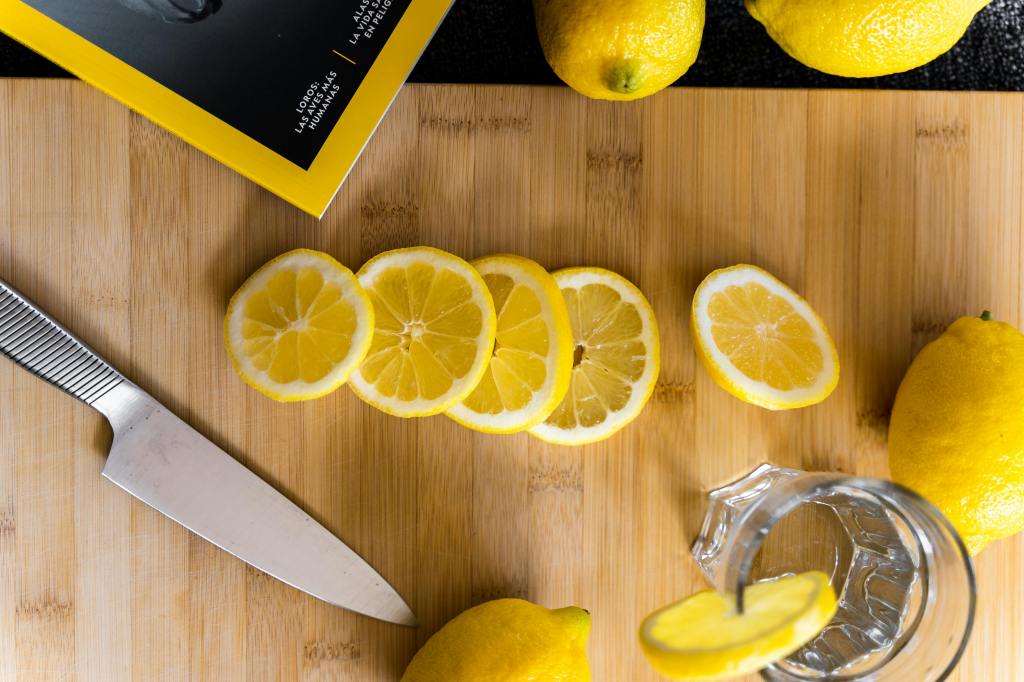
Not only does this make your water taste better, but it can help out with so many bodily functions. For one, the lemon and salt combination adds needed electrolytes to your water which makes it more hydrating.
Lemon-salt water contains vitamin C, which is useful for kidney health as well. After switching, I noticed right away that I felt more hydrated. Definitely give this one a shot! It’s the easiest way to get more electrolytes in your everyday routine.
How to: I prefer to use pink Himalayan pink salt or Celtic sea salt – you only need to add a pinch into your water with half of a squeezed lemon. I do this everyday in a 30 oz water bottle, and it’s the perfect amount of lemon flavor for me. You can adjust how much lemon and salt according to your preferences.
2. oil pulling

Oil pulling has the ability to transform your oral health, and it doesn’t require too much effort. Coconut oil removes bacteria, prevents cavities, and is anti-inflammatory.1 It’s been proven to help remove plaque and is a great way to begin incorporating more natural products into your routine.2
Coconut oil has so many benefits and uses, so I would l highly recommend getting yourself a jar to keep in the house. I like to have at least two – one for self-care and one for cooking. I keep two 54oz containers around the house in addition to a third, smaller one that I only use for oil pulling.
How to: Take a spoonful (about a tablespoon) of coconut oil, and put it in your mouth! Swish around until it melts, then continue to swish for 15-20 minutes. Occupy yourself with any activity that doesn’t require talking or eating, and then spit it into the trash. DO NOT spit into your sink! Coconut oil hardens at cold temperatures, so it can easily clog drains. Then, make sure to brush your teeth to remove the junk that remains in your mouth.
If you’re like me and hate the taste of solid coconut oil, try melting it down before using it for oil pulling. It will help with the texture! The taste goes away shortly after you start – I promise it’s not that bad if you stick with it.
A note: If you want to add spice up your oil pulling sessions, try adding some clove or peppermint essential oil. Cloves have been used in dentistry historically due to a compound called eugenol that is good at fighting infections and bacteria in the mouth. Plus, it smells delicious! I add a few drops of clove and cinnamon essential oil to my coconut oil when I do my oil pulling.
3. make a smoothie
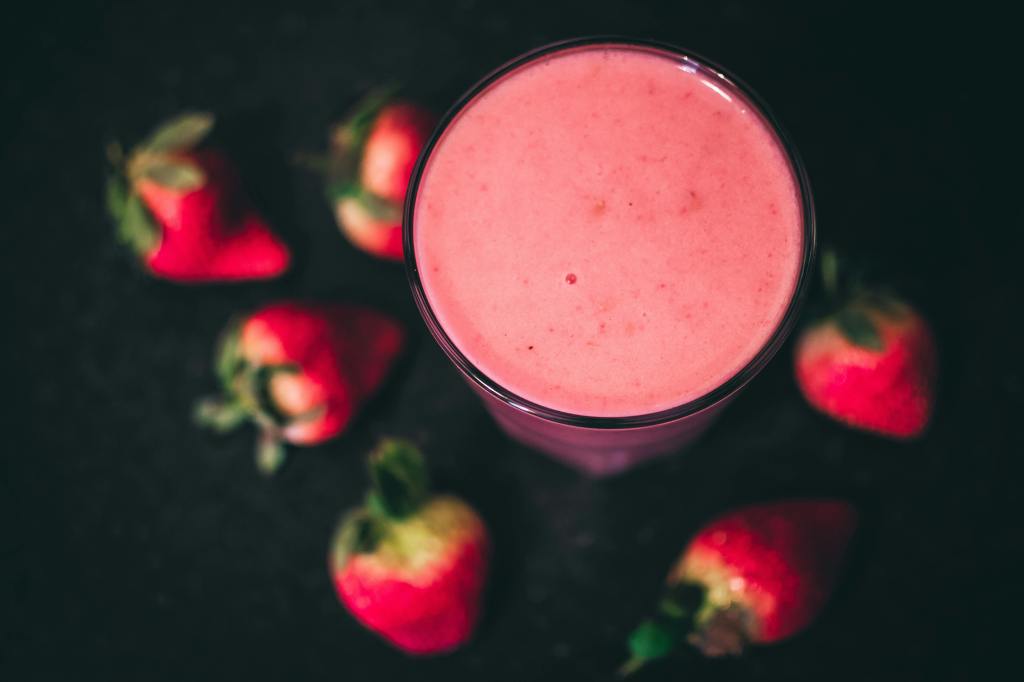
Adding more whole foods to your diet is always a good idea, as they help to increase your energy, mood, and gut health. Fruit specifically has the ability to lower the chance of heart disease and cholesterol levels, not to mention promote bowel health with high levels of fiber.3 Making a smoothie before or with your breakfast will help you fit in your daily serving of fruit – not to mention they’re so yummy.
How to: In a blender, combine 1 1/2 cup of frozen fruit of your choice. Add water or 100% fruit juice until fruit is almost covered, leaving about 1 inch of fruit uncovered. Blend on high until smooth, adding more water/juice until you reach desired consistency. Pour into a glass and enjoy.
Optional ingredients: ginger, cacao powder, honey
Some people add spinach, milk, yogurt, or plant milks to their smoothies. I try to stick to just fruit, because Ayurveda food combining teaches us that some combinations are bad for digestion. If you’d like to read more about this, here is an article from The Ayurvedic Institute: https://ayurveda.com/incompatible-food-combining/
4. take a walk

Walking does not need to be a chore. Taking a quick 15-30 minute walk everyday helps to get your body moving and maintain muscle and joint health.4
How to: Put on your favorite pair of sneakers and head outside! I like to walk through a local park, usually I’ll go 15 minutes one way and turn around to get in a quick 30 minute walk on days I’m pressed for time.
5. stretch your body
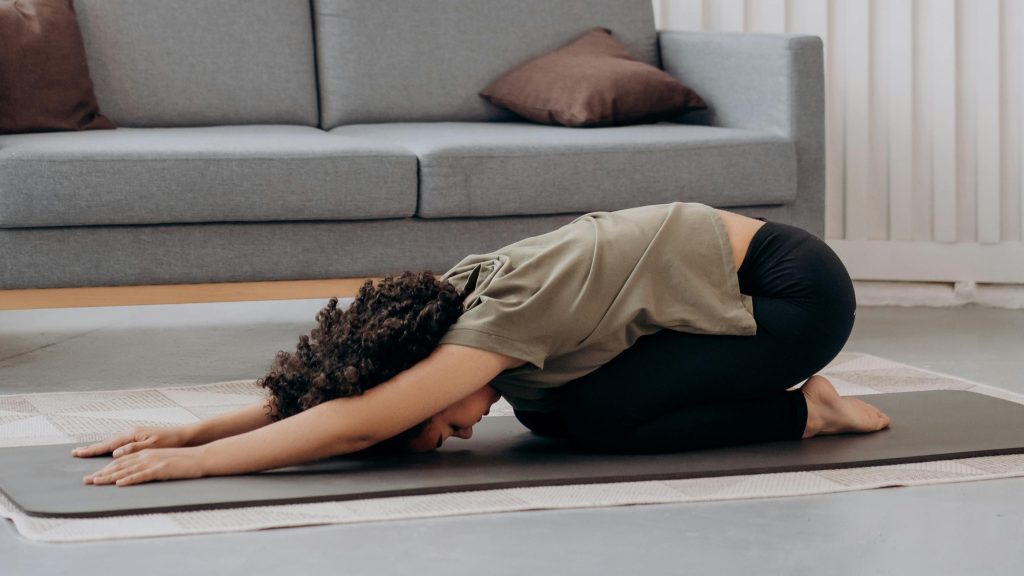
If you’re not stretching your body on a regular basis, you’re missing out on so many benefits that can completely transform your well-being. Our bodies tend to get stiff when we sit for many hours of the day or lay in bed scrolling through our phones.
Stretching improves soreness, stiffness, and flexibility. 5 A simple 10 minute stretch in the morning or evening (or both!) has the ability to release built up tension in the body while ensuring we maintain our mobility.
How to: If you’re new to stretching, the easiest way to incorporate it into your routine is to follow along with a YouTube video. Try searching “10 minute morning stretch,” “Morning mobility stretches,” or “15 minute stretches to do before bed.” Here are some of the videos I’ve found that I like:
- https://www.youtube.com/watch?v=9OzgI4DYw0k&t=67s&ab_channel=ObiVincent
- https://www.youtube.com/watch?v=iNkR5nQFa3E&ab_channel=ObiVincent
- https://www.youtube.com/watch?v=WF88MJGikNU&ab_channel=julia.reppel
- https://www.youtube.com/watch?v=6yETVwvvvjQ&ab_channel=julia.reppel
6. meditate
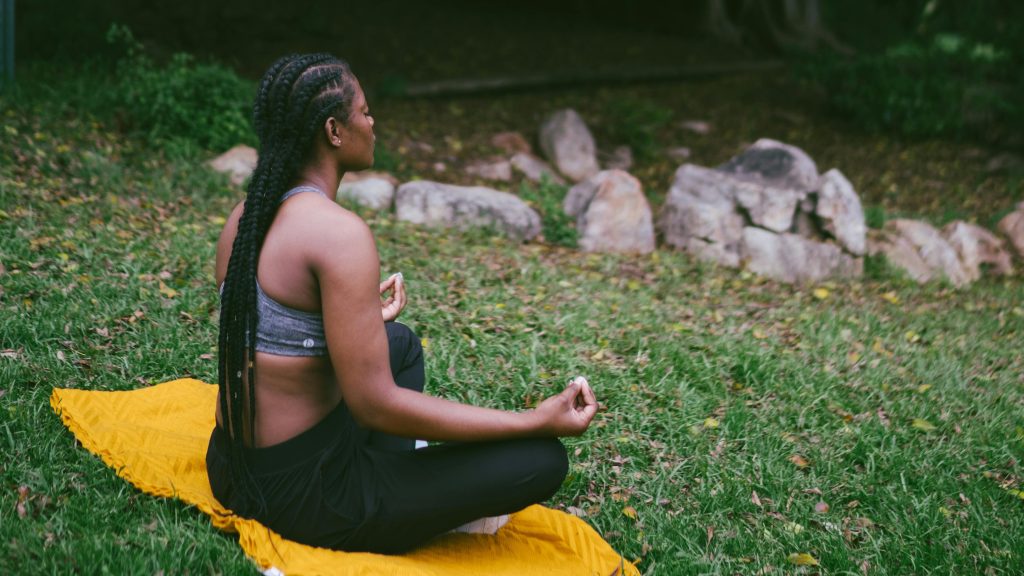
American culture is centered around being busy. As a capitalistic society, we collectively don’t value relaxation and instead encourage people to work and constantly aim to get more money and move up on the social ladder. We all fall victim to it at times, but we also have the ability to step away and allow our bodies and minds to rest. Constantly, we have things to do, errands to run, videos to entertain our brains. Taking a step away from all of this and meditating has the ability to calm the mind and body, lower blood pressure, reduce stress, and can help to improve our declining attention spans.6
How to: Find a quiet space where you feel safe. I like to sit on the floor, as it makes me feel more grounded than sitting somewhere like my bed. When you’re comfortable, close your eyes and take a few deep breaths: in through the nose and out through the mouth. When you feel comfortable with your breathing, focus on your body. Bring awareness to each body part, starting with your feet and ending with your head. If you feel any tension, relax that part of your body and keep breathing. Try your best to maintain your breathing and relaxed body. Focus on your breath, and adjust your body as needed if you find yourself tensing up anywhere. If you’re new to meditating, this may be harder than it sounds. Try setting a timer for 3 minutes before you start, making sure you continue breathing and keep your eyes closed until the timer goes off. If you can do that, work your way up to meditating for longer. I usually do 10 minutes at a time, but I’m building up to longer sessions.
There’s no right or wrong way to meditate. The goal is to bring awareness to your breath, mind, and body. I like to listen to this audio when I meditate, as I’ve found that it helps me focus:
7. get a good night’s sleep

Sleeping is vital for so many bodily functions, but most people don’t get enough quality sleep. I take magnesium glycinate before going to bed, which has really improved how rested I am in the morning. If you’re looking for an easy way to improve your well-being, just go to sleep a bit earlier! Getting 7-8 hours of sleep helps to maintain a healthy immune system, improve mood and athletic performance, and reduce stress.7 If you aren’t always able to get enough sleep because of your schedule, make sure you’re prioritizing your health in other ways throughout your day. Take a moment to rest, eat whole foods, and stay hydrated. Keep in mind that sleep is critical for maintaining good health, so do what you can to prioritize 7-8 hours a night.
How to: Go to sleep early ! Give yourself at least 7 hours each night. Repeat.
8. create some goals

Personally, goal setting has helped me gain a much-needed sense of direction when I was feeling lost. As a soon-to-be college graduate, I often think about my future and what I want for myself in the long run. As my graduation date quickly approaches, the pressure to “figure it all out” gets worse. A few months ago I had no idea what I wanted to pursue beyond my education, much less what I wanted to do for the rest of my life. Sitting down and creating a few goals has helped to create a bit of structure that makes me feel like I’m working towards something meaningful.
Goals don’t have to be daunting. If you find yourself overwhelmed by goal-setting, focus on goals that are easily obtainable but important to you nonetheless. My personal goals were focused around consistency in the gym, saving small amounts of money, and slight diet changes. You can break bigger goals down into smaller milestones to make them less daunting.
How to: Make a list of things you want out of life. This can be anything – don’t overthink it. Do you want to cook for yourself more? Improve your hygiene, get better spending habits? Once you’ve determined the things you want to do or get better at, write out your end goal. Say it’s January and you want to start a cooking blog before the end of the year. Your end goal may be, “Create and launch a successful cooking blog by August.” In order to accomplish your end goal, break down steps that will allow you to get there. I like to break down my goals into 3-4 sub-goals. For our cooking blog example, your sub-goals could look like this:
- Decide on a blog name by the end of January
- Research website building sites and decide on one to use by March 1st
- Design and edit blog. Write 5 blog posts (drafts) before end of May
- Edit posts and launch blog to public on July 15th.
This is a great way to accomplish your goals, as it sets specific milestones that structure your timeline and make tackling your goal a little more manageable. I like to add dates to my subgoals, because this helps to keep me on track. Do what works best for you!
Even though these are relatively simple ways to improve your wellness, adding anything new to your routine can be a lot. Always remember to have patience with yourself!
- Faizal C. Peedikayil , “Is coconut oil good for oral health? A review,” Journal of Health Research and Reviews in Developing Countries 6, no. 1 (April 2019): 1-4, https://www.jhrr.org/article.asp?issn=2394-2010;year=2019;volume=6;issue=1;spage=1;epage=4;aulast=Peedikayil. ↩︎
- Jithender Nagilla et al., “Comparative Evaluation of Antiplaque Efficacy of Coconut Oil Pulling and a Placebo, Among Dental College Students: A Randomized Controlled Trial,” Journal of Clinical and Diagnostic Research 11, no. 9 (Sep 2017): ZC08-ZC11, https://jcdr.net/article_fulltext.asp?issn=0973-709x&year=2017&volume=11&issue=9&page=ZC08&issn=0973-709x&id=10563. ↩︎
- “Fruits,” USDA MyPlate, accessed February 10, 2024, https://www.myplate.gov/eat-healthy/fruits#:~:text=guava%2C%20and%20kiwifruit.-,Nutrients,are%20sources%20of%20dietary%20fiber. ↩︎
- Jeremy N. Morris and Adrianne E. Hardman, “Walking to Health,” Sports Med 23, no. 1 (May 1997): 306-322, https://doi.org/10.2165/00007256-199723050-00004 ↩︎
- Vijay Y. Deshmukh, “Health Benefits of Stretching,”Aayushi International Interdisciplinary Research Journal 6, no. 5 (May 2019): 123-126, https://aiirjournal.com/uploads/Articles/2019/05/3818_26.Prof.%20Vijay%20Y.%20Deshmukh.pdf ↩︎
- Matthew Thorpe, “12 Benefits of Meditation,” Healthline, Healthline Media, 11 May 2023, http://www.healthline.com/nutrition/12-benefits-of-meditation#5.-Lengthens-attention-span. ↩︎
- Jay Summer and Abhinav Singh, “8 Health Benefits of Sleep,” Sleep Foundation , 29 Feb. 2024, http://www.sleepfoundation.org/how-sleep-works/benefits-of-sleep. ↩︎
 edification of a wildflower