The information provided by this blog is meant to be informational only. It is not meant to serve as medical advice, treatment, or diagnosis. Please consult with your doctor before adding anything new to your diet or routine.
What is a salve?
Salves are protective and soothing balms for the skin. Salves can help with dry skin, rashes, and chapped lips due to their incredible moisturizing ability and high fat content. They can also be particularly helpful for those with acne, eczema, and even bruises. Typically, salves are comprised of some sort of herb-infused oil and beeswax.
There are many types of salves, one of the more common types being drawing salves. These work by moisturizing the skin surrounding a small foreign object like a splinter. Moisturizing the skin allows it to become softer and makes it easier to remove small items that have become embedded into the skin.
What is a salve made of?
Traditionally, salves were used medicinally due to the healing properties of the plants used for the infused oil used to make them. The true origin of salves has been difficult to find in text due to its roots in folk medicine, but there’s some interesting information on salves in the early twentieth century on The Smithsonian Institute’s website that’s worth checking out if you want to know more.
You can find recipes for salves using various plant, herb, and oil combinations, but the recipe I’m sharing has beeswax, herb-infused olive oil, and coconut oil.
Herbs give salves their incredible healing ability. My mom has made peony, dandelion, and plantain leaf salves so far, but the possibilities are endless. To extract the herbs’ healing power, you need to infuse them oil. I’m going to share my mom’s method for making with you today.
How do you make a salve?

To make a salve, you need to begin with making an infused oil. My mom has a simple method for infusing oil with herbs that doesn’t require any fancy equipment. You will need:
- Glass liquid measuring cup or double boiler
- Medium sized pot
- Wooden spoon
- Olive oil, can sub for jojoba or sweet almond oil
- Dried herbs, roughly chopped – fresh herbs can be used, but you risk the chance of mold growing in your final product.
To infuse oil on the stove, you need to heat up herbs and oil slowly over time. Fill your pot with a small bit of water, enough to fill it just about half way. Place on the stove with your double boiler or glass measuring cup. In the double boiler, combine olive oil and chopped herbs. The ratio of herbs to oil should be about 1:5, weight:volume. For example, 1 cup of olive oil is 8 oz, so you would want to use ~1.5 oz of dried herbs. This ratio doesn’t need to be exact, but if you want to harness the healing properties of the herbs you should try to stick close to the 1:5 ratio.
Simmer on low heat for 2-5 hours. Do not cover. This will allow any moisture inside to evaporate and the herbs to infuse slowly. Allow oil to cool to room temperature before straining to remove herb solids to avoid burns.
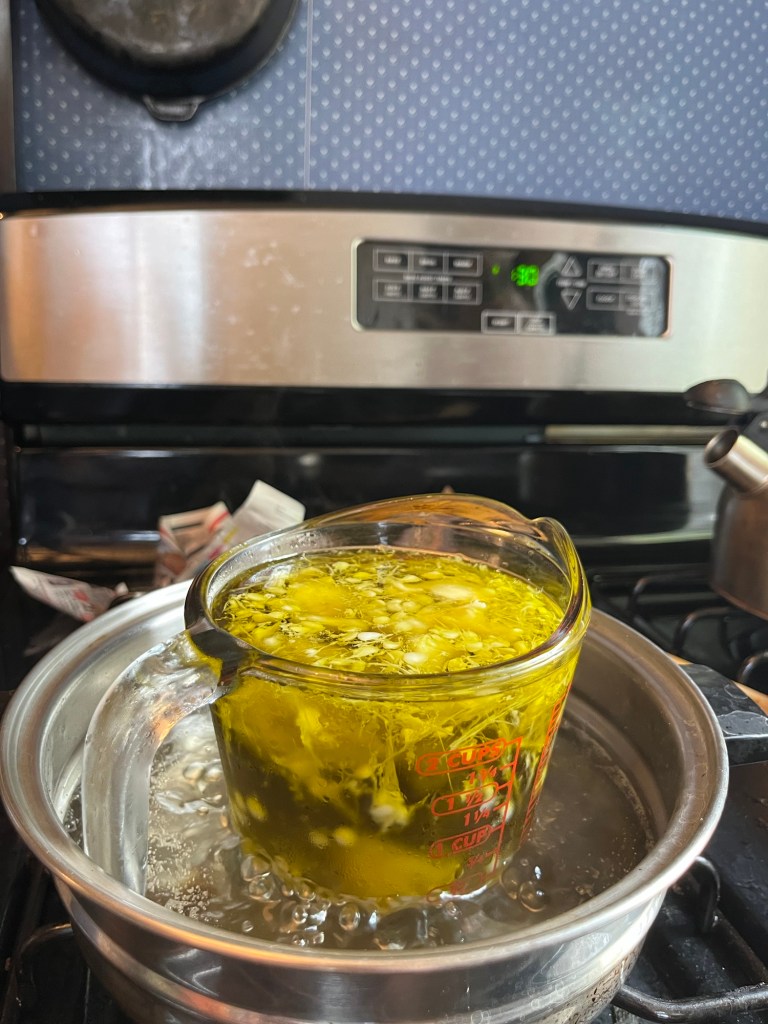
Using the same double boiler method, place herb-infused oil and double boiler into pot with water. Bring water to a continuous boil to heat up infused oil. Once warm, add beeswax and stir with back end of wooden spoon until completely melted and combined.
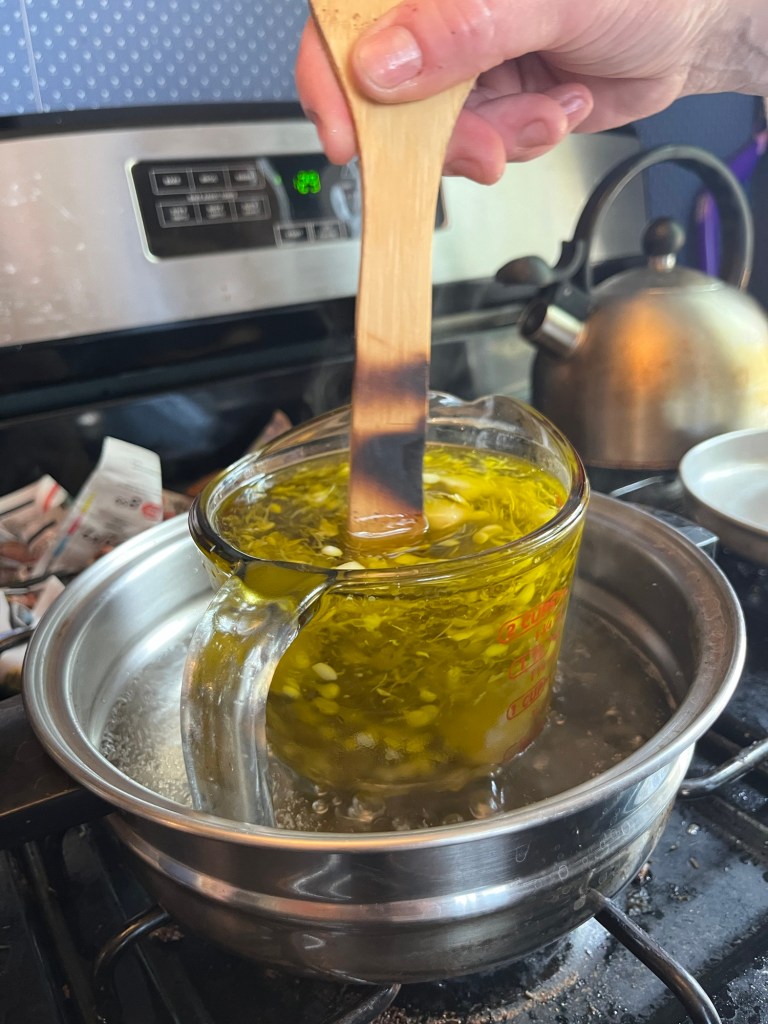
Once completed melted and combined, remove from heat and allow to cool for about 5 minutes. Add essential oils if desired and stir. Transfer to tins or jars and allow to cool completely.
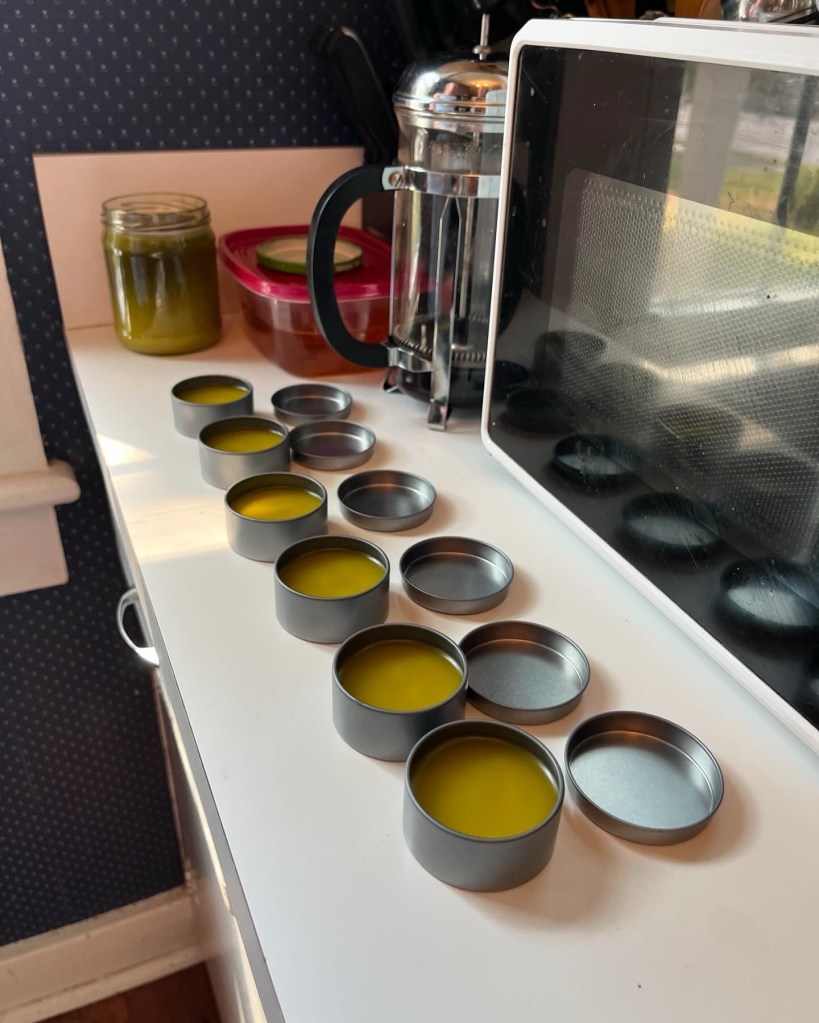
The longest part of this process is waiting for your oil to be infused – aside from that, making salves is fairly simple and extremely rewarding. Salves are also highly customizable, so you can create whatever combinations you want to fit your needs.
Thank you for reading and allowing me to share my mom’s practices with you. As always please feel free to comment with any questions. Until next time!
Diana
 edification of a wildflower
Leave a comment